Molecule-first
Jump to compounds
Start from a chemical idea or a single target name. Risk: optimizing a molecule before the disease biology is clear, or treating one gene as the whole disease.
 ProtScope™
Home · Biology
Characterize disease by investigating proteins, proteotoxicity, pathogenic variants, and shared cellular pathways involved in disease progression.
ProtScope™ is a platform where neurodegenerative diseases can be studied by analyzing proteins and pathological processes.
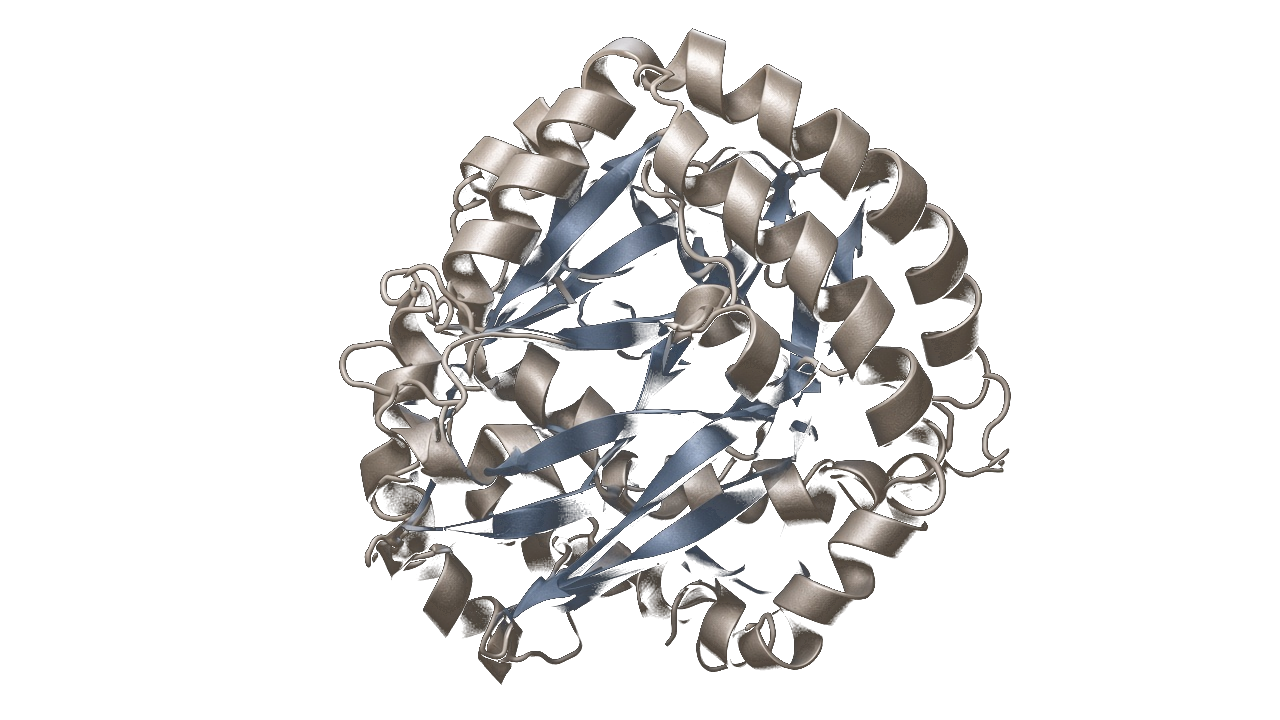
Helix Sheet
Building
Profilin-1
A disease mechanism is a pathological process that can impact an organ, such as the central nervous system, and injure vulnerable neurons. For example, proteotoxicity that includes protein misfolding and aggregation, endoplasmic reticulum stress, cytoskeletal stress, mitochondrial dysfunction, or impaired axonal transport may be involved. Genes and proteins that malfunction in diseases can converge on overlapping routes. Mapping those routes helps in understanding the details and how the events take place within an organ and in the body.
In the nervous system, neurons are specialized for the functions they carry out, such as motor neurons (upper and lower), dopaminergic neurons, cortical neurons, and striatal neurons. They all have machinery that normally keeps organelles working under robust quality control, so they can carry out neurotransmission, cargo transport, and other tasks while maintaining cytoskeletal integrity. When those systems are injured and neuronal integrity and function are affected, neurological symptoms appear in a variety of ways.
ProtScope™ enables you to investigate these by examining each component, starting from genes and proteins, and conducting AI-powered protein chemistry experiments on this site to discover the mechanism and identify targets.
Molecule-first
Start from a chemical idea or a single target name. Risk: optimizing a molecule before the disease biology is clear, or treating one gene as the whole disease.
Biology
Start from proteins, alleles, and evidence. Compare shared vs unique routes across genes and diseases. Prioritize what to investigate; molecule design comes later.
Same progressive order as a careful discovery program, without claiming a pipeline.
Neurodegenerative diseases are clinically distinct but often share failure themes. Mechanisms are the language that connects them without equating them.
Some proteins lack classic inhibitor pockets. Understanding conformation, aggregation, and scaffolding still guides experiments and future modalities.
Biomarkers can reflect injury without proving one mutation’s mechanism. ProtScope labels confidence and gaps on purpose.